Book a treatment
Japanese Sekkotsu, Anma massage, acupuncture, cupping, nutrition and more – integrated in one session.
See treatmentsTrain with us
The Chestnut Centre – School of Japanese Integrated Medicine runs practitioner courses in Stoke Poges, Germany, the Czech Republic and Majorca.
See coursesFind a practitioner
Registered practitioners of Amatsu Japanese Integrated Medicine across the UK and Europe.
Search the registerStoke Poges, Buckinghamshire
Japanese acupuncture and integrated treatment near Slough
The Chestnut Clinic is at The Chestnut Centre, Snitterfield Farm, Grays Park Road, Stoke Poges – a short drive from Slough, Farnham Common, Gerrards Cross and Beaconsfield. In one session our practitioners integrate traditional Japanese therapies such as Japanese acupuncture, moxibustion and cupping, Japanese ‘Anma’ massage and ‘Sekkotsu’ joint and spine mobilisation.
Bookings are by phone, Tuesday to Friday, 10am to 6pm, on 01753 533768. Find directions to the clinic.
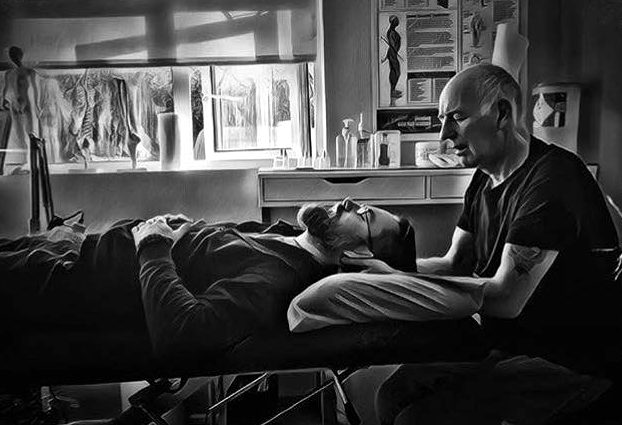
Integrated treatment
One session, many therapies
The Chestnut Team can also be booked for a full-day treatment service at your location, including film studios and on location.
Prices & bookingThe Chestnut Centre – School of Japanese Integrated Medicine
Learn from a living tradition
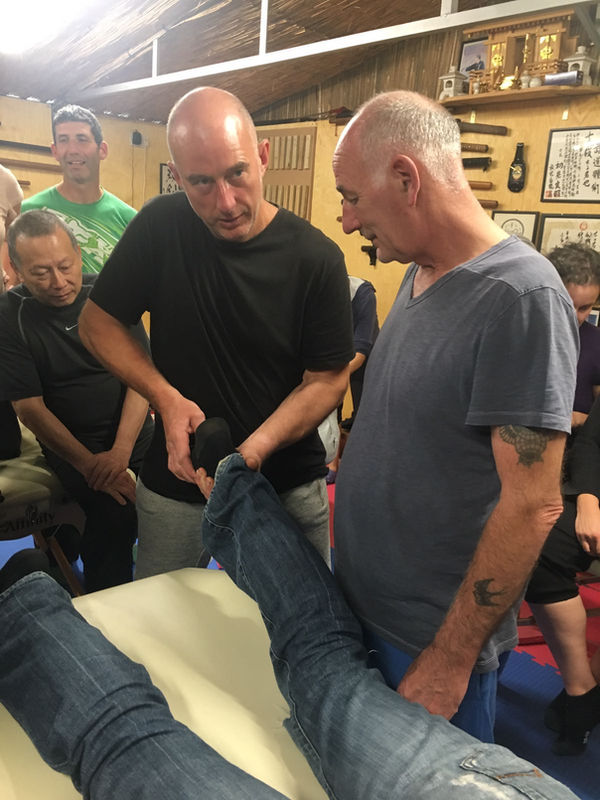
In 1995 Dr Hatsumi awarded Chris Roworth ‘Menkyo Kaiden’ teaching rights in Japanese Integrated Medicine (Amatsu Hichibuku Goshinjutsu). Chris now runs courses at The Chestnut Centre to pass on the knowledge, experience and skills he received from Dr Hatsumi.
Japanese medicine
Did you know?
A few facts about the history and culture behind traditional Japanese medicine.
Fact 01
The guide tube
Japanese acupuncture is known for its very fine needles, often placed with the help of a slim guide tube called a shinkan. The tube is credited to Sugiyama Waichi, a blind acupuncturist of the 17th-century Edo period.
Fact 02
Schools for blind practitioners
Sugiyama Waichi treated the shōgun Tokugawa Tsunayoshi and set up training schools for blind students. Acupuncture and massage became a respected profession for visually impaired people in Japan, a tradition that continues today.
Fact 03
‘Press and rub’
Anma (按摩) is written with two characters meaning ‘press’ and ‘rub’. It came to Japan from China and was already part of court medicine in the 8th century. By the Edo period it was practised widely, often by blind practitioners.
Fact 04
Where ‘moxa’ comes from
Moxibustion uses moxa: soft, woolly fibres made from dried mugwort leaves. In Japanese it is called mogusa, and the English word ‘moxa’ comes from that Japanese name.
Fact 05
A poet’s travel kit
In 1689, getting ready for the long walk described in The Narrow Road to the Deep North, the haiku poet Matsuo Bashō wrote that he applied moxa below his knees at the point known as sanri.
Fact 06
Ki in everyday words
Ki (気) is the Japanese reading of the same character as the Chinese Qi or Chi. It turns up in everyday Japanese: genki (元気) means lively or well, and tenki (天気) means weather.
Fact 07
Sekkotsu: ‘joining bones’
Sekkotsu (接骨) literally means ‘joining bones’. In Japan, bone-setting has long been linked with the martial arts, and today’s sekkotsu clinics are run by licensed judo therapists (jūdō seifukushi).
Fact 08
The meaning of Amatsu
Dr Masaaki Hatsumi wrote Amatsu as 天津, meaning heavenly or divine. He linked Amatsu medicine to old traditions in which martial arts, bone-setting and natural medicine were taught side by side.
Fact 09
Japan’s oldest medical book
The Ishinpō, completed by the court physician Tanba no Yasuyori in 984, is the oldest surviving Japanese medical text. One early manuscript copy is a designated National Treasure of Japan.
“Past, Present, Future… Present is most important”Masaaki Hatsumi